

Rosella Care and Feeding

Housing, diet and health for eastern, crimson and pale-headed rosellas, from an Australian keeper's point of view.

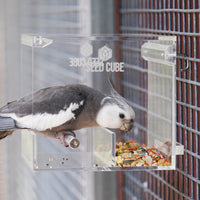
Crimson rosella perched on a tree stump, suited to a Small Seed Cube no-mess feeder

Rosella Feeder

See why the Small Seed Cube suits a rosella and keeps husks off the aviary floor.

View the feeder
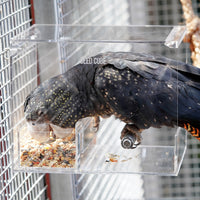
Crimson rosella showing its long tail, sized for the Small Seed Cube no-mess feeder

Which Size Fits My Bird?

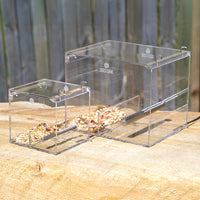
Compare the Small and Large Seed Cube and check where a rosella sits.

Check the size guide
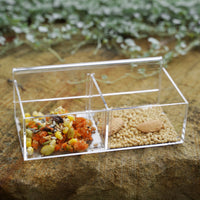
Eastern rosella foraging on the ground, what to feed a rosella diet guide

What to Feed a Rosella

The full diet guide: pellets, greens, seed as a treat, and why the floor matters.

Read the diet guide
Species hero image
Platycercus spp.

Rosella

Bright, busy Australian ground feeders that need their seed kept clean and off the floor

Behavioral Profile

Mess Potential High
Low High
Vocalization Level Moderate
Quiet Loud

Species Specifications

Size

Small (30 to 37 cm)

Weight

95 to 170 g depending on species

Feather Type

Powder-light, low dander

Lifespan

15 to 25 years in captivity

Temperament

Active, independent and very territorial with other birds

Origins

Australia and Tasmania

Suitable Foods

Small parrot pellets, quality seed mix, daily greens and vegetables, native browse

Care Level

Beginner to intermediate

Care Notes

Common Feeding Mistakes
The most common mistake is a sunflower-heavy seed mix and nothing else. Rosellas pick out the fatty seed and leave the rest, which drives obesity and leaves them short on vitamin A, calcium and iodine. Build the diet on small parrot pellets with daily vegetables and greens, keep seed to about 10 per cent, and do not let spilled seed build up on the aviary floor, which is the biggest avoidable parasite risk for a ground-feeding parrot.
Habitat Requirements
An outdoor flight aviary suits rosellas better than an indoor cage, with length prioritised so they can fly properly. Floor surface matters more than for most parrots: RSPCA Australia notes a dirt-floored aviary holding ground feeders is the setup most likely to cause heavy parasite losses, while concrete or pavers can cut worming to two or three times a year. Provide natural branch perches, native browse such as bottlebrush and eucalyptus, and a shallow bath. Note that most rosella species require a licence in Victoria.
Handling & Socialisation
Rosellas are watchers rather than cuddlers. A hand-raised bird can become confident and will step up, but most stay somewhat aloof, dislike sustained handling and rarely learn to talk. They are aggressive toward other birds and should not be mixed, so one pair to an aviary is the standard recommendation. Native browse, foraging and chewable wood will keep a rosella occupied far better than forced social time.